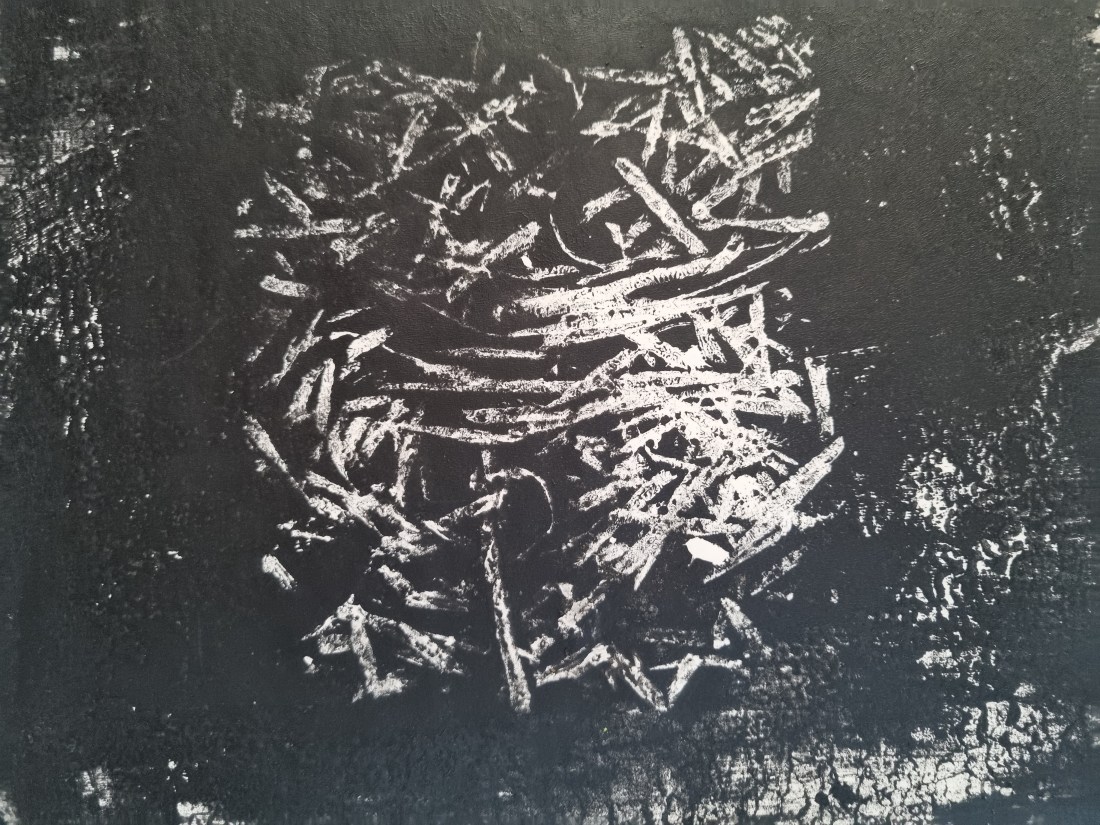
HAY POETRY #Trolldekt@Trolleberg
// STATUS: completed/ PROGRAM: office renovation / PLACE: Trolleberg (Lund) Sweden / PROMOTER: iliilil architecture / PERIOD: 2020 /
Attached is the journey and thoughts of renovation process of old stable to (my own) architecture office/atelier/lab. All described from hay to how. About countryside reimagined, reused, recycled. Low cost and deep thinking. Low effort and high impact. What happens when you are a client and designer (and builder and artist and writer) at the same time. Poetry happens. Hay poetry.
hay / raw / osb / lab / pop

HAY POETRY
The meeting.
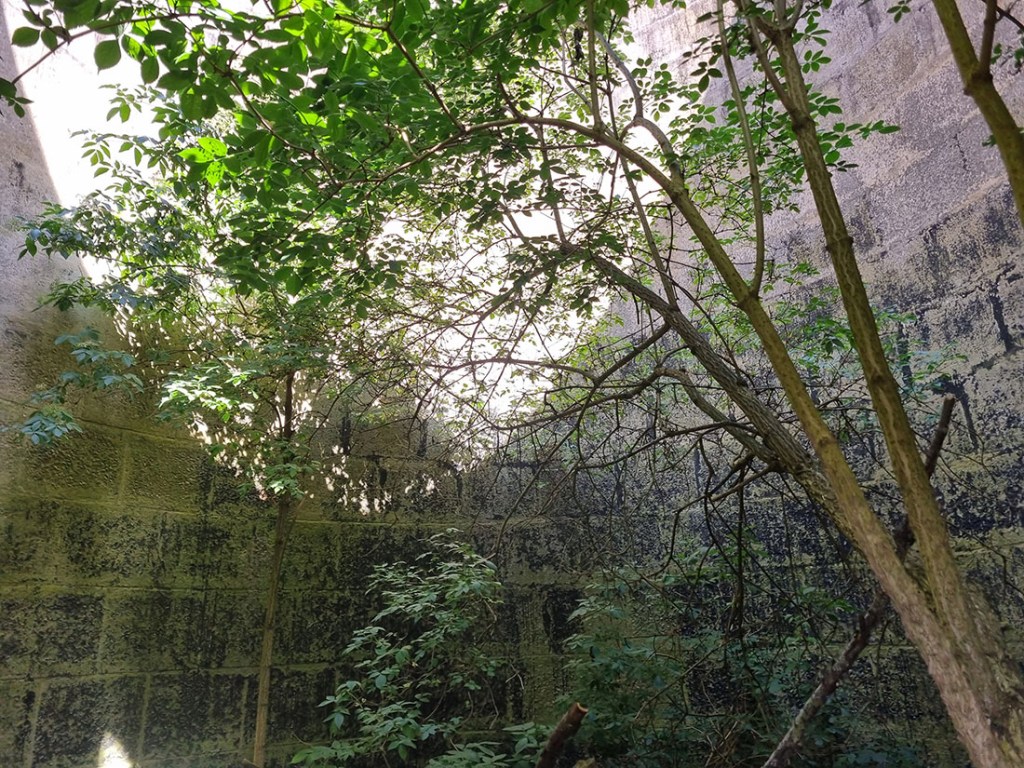
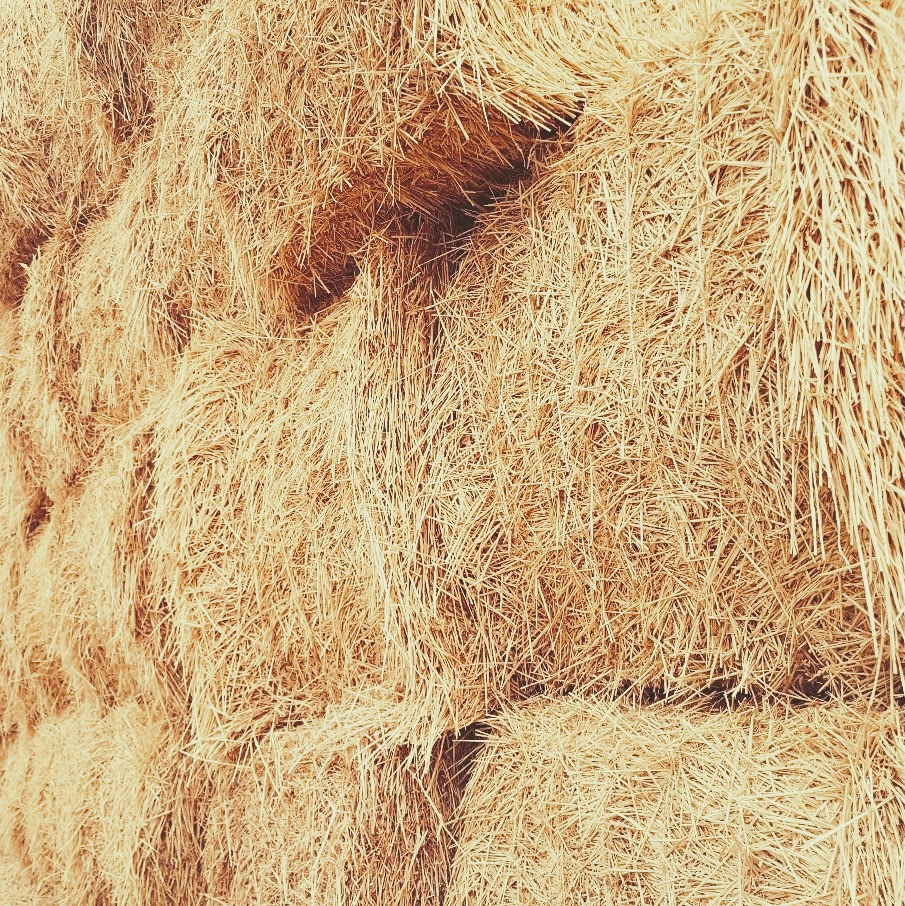
Atelier in the countryside? Sounds so pastoral. The First Time I go to check out the old stables where I was offered a space to rent, I discover a huge construction just behind the building, entirely made of hay packs, stacked. Entangled bundles. Long as a stadium, high as a high-rise, a hay-rise. Hej, hi, neighbor, I say. Hay, neighbor. Hej hay!
“I’ll take it,” I say, taken. Later, this first meeting with the huge wall of fibres, bundled, packed and stacked, plays an important role in design of Atelier. I think of the story of three pigs and a wolf, where one piglet built this creative building of hay, that was a true experimental architect! And so it goes.

As everyone knows countryside is not just pastoral anymore. Much high-tech and advanced science are now inserted in countryside, along with many radical or global processes: from data server halls to gene manipulated animals to algorithm planted fields to seasonal migrant workers – it is at least as exciting as a city.
I am happy to find a place on the border of both, right in-between the pastoral city of Lund and the futuristic fields. I share my lunch with the cows while the worlds biggest airplane shows its belly above my head landing on Kastrup Airport. I share the building with tractors where drivers are connected to satellites, and with a solar panel company which is connected to sun itself.

Countryside secrets:

The beginning.
The room available to rent is unfinished, raw, rough and concrete: cement floor, exposed bricks, partly OSB wall ("oriented strand board, an engineered wood"). That – raw – must be element of the design, I decide immediately, and I say “no, no way” to gypsum panels and plastic windows that I observed in rental unit just besides, a true slaughter of soul. I need the concrete floor to cast concrete on, rough surfaces to build prototypes on. Because I want the Atelier not only to be a tone-in-tone designed design office but also a testbed, for materials, for finishes. En bruto construction where the process is visible. Visualizing in my head a studio that strives to experiment. The concrete and OSB stay, I say.
Another local ingredient of the countryside is the 360 degrees open sky of Scania, “pampas”: the light. And it is just beautiful: 3 stable windows facing north, most ideal light of all lights for artists. Huge double stable doors, a whole wall indeed, facing east, injecting the mornings with vitamin D, that open up and de facto make architecture only that thin thin line between i exterior and interior, between the landscape outside and interior inside, sort of infinity pool (often described in fancy words in projects as “erasing out the border between in and out”, “letting the nature come in”). Finally, later, the evening sun hits the brick wall outside, made for slow down, after-work, long shadows and contemplation.
Re-introducing "hay-stacks":

Next. Nest.
Shortly: in my hands I have a raw stable with northern light on the border of the high tech and pastoral which I wish to turn into an office, atelier, studio, gallery, testbed, lab, stage, platform, oasis, and a greenhouse, of ideas, maybe.
I am not shy. I build it, all of it. Some even literally.
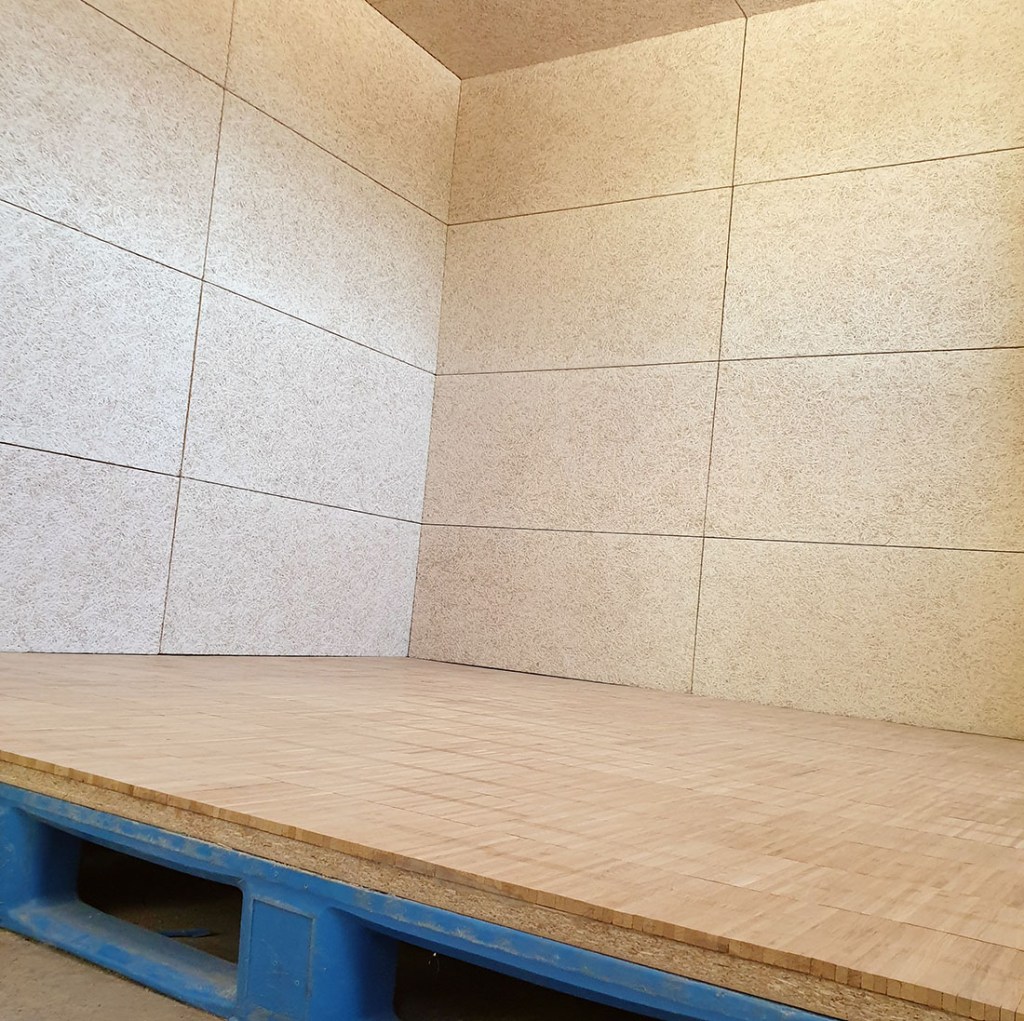
An elevated stage, for the back office. A platform made of platforms, of EUR pallets – “a flat transport structure, which supports goods in a stable fashion”.
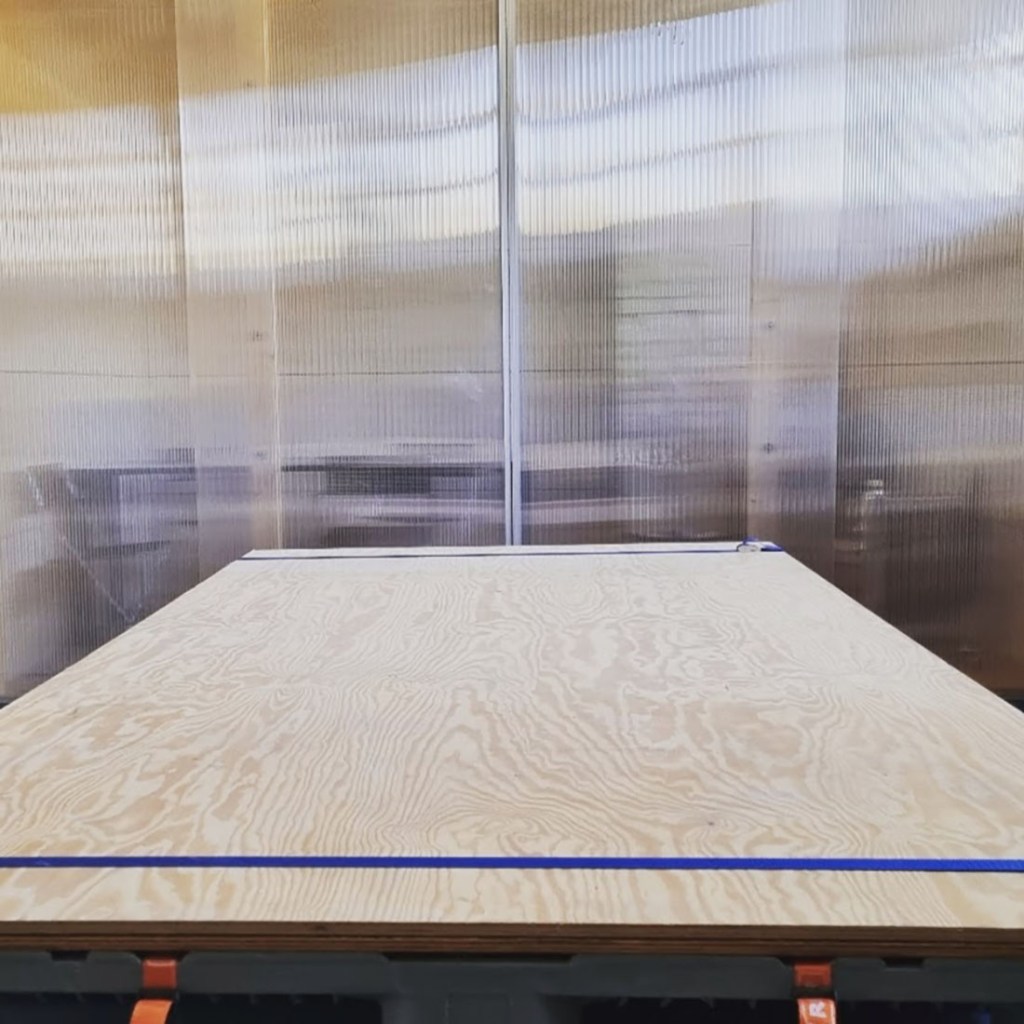
A huge table – or is it bed, testbed? – also made of pallets, stacked, and bonded with lashing straps, in the middle of the room. Easy to loosen the stripes and reconfigure into any configuration. Change materials of top-surface, even, from plywood to polycarbonate, color tests, lack, oil.
Oasis made of "Greenhouse Insulating Polycarbonate Panels" for sliding walls and hanging gardens.
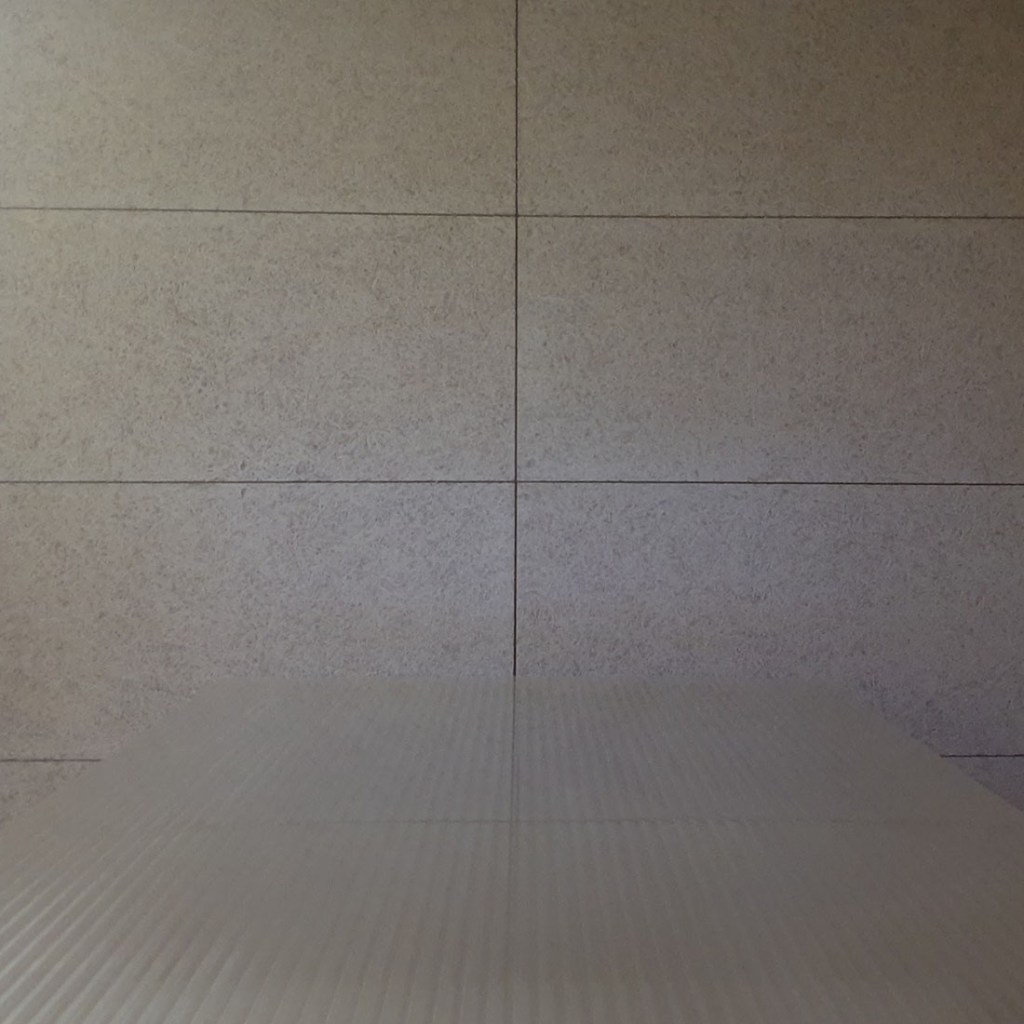
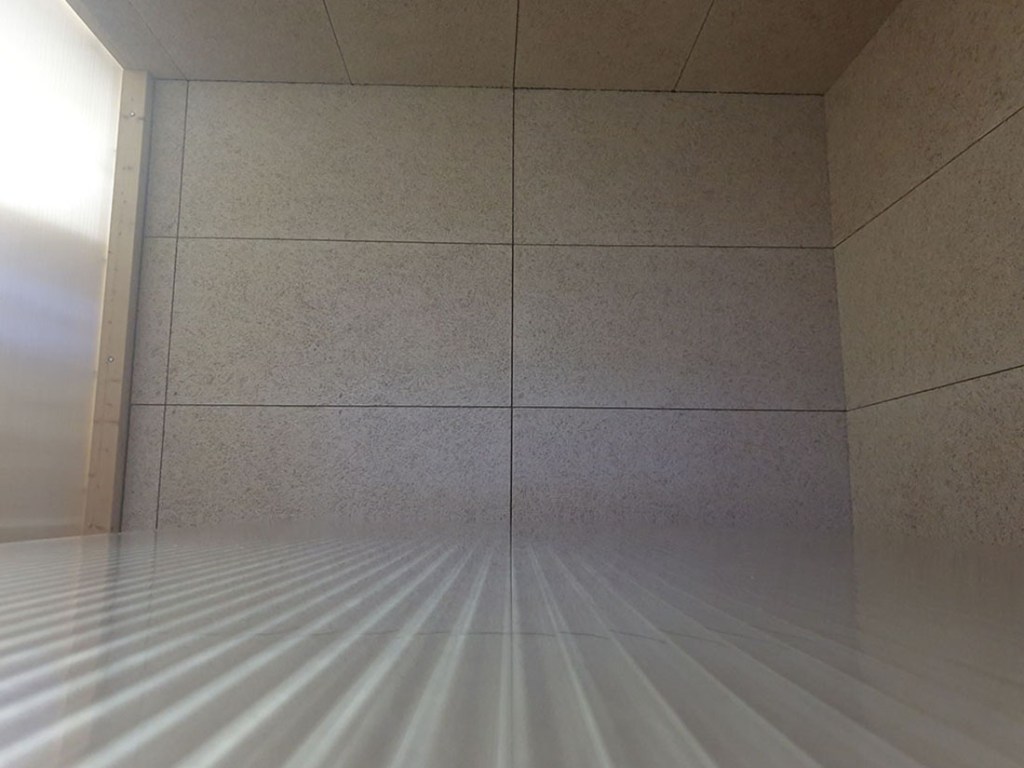
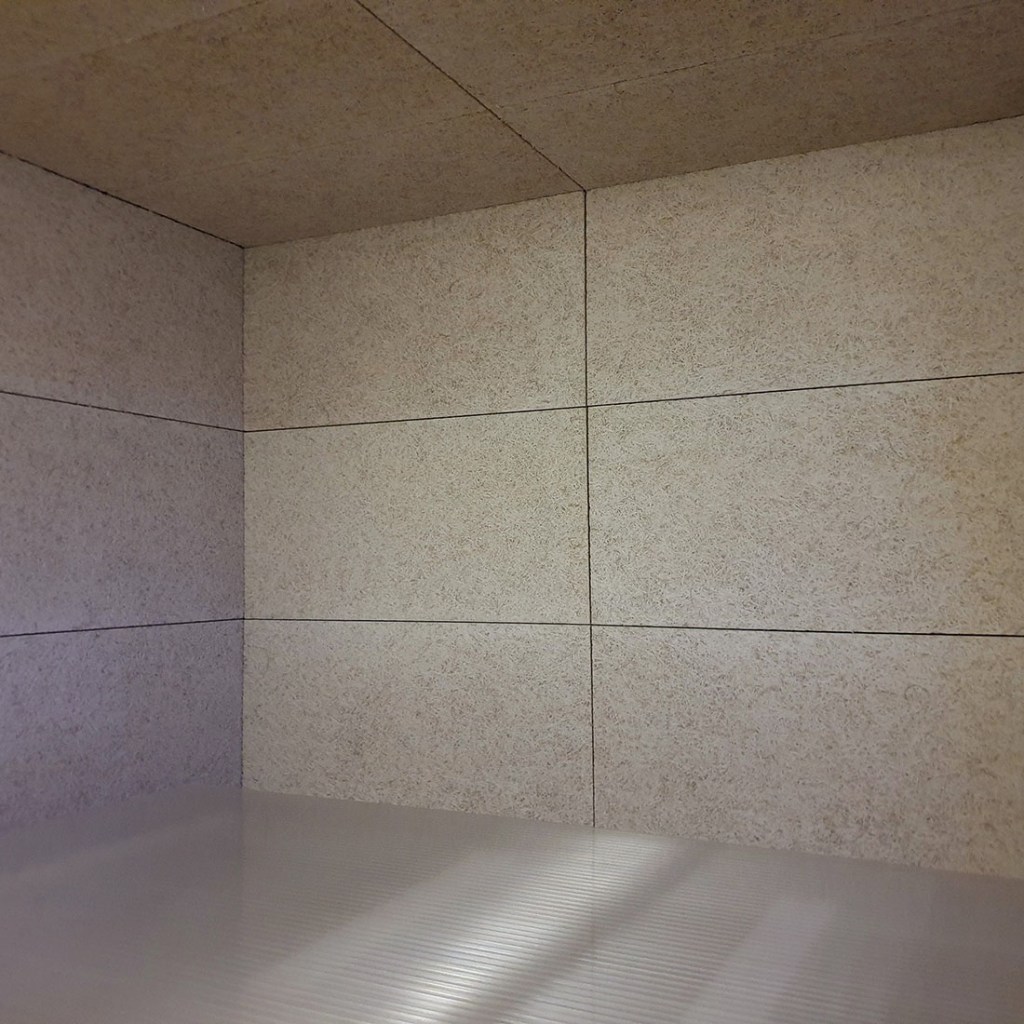
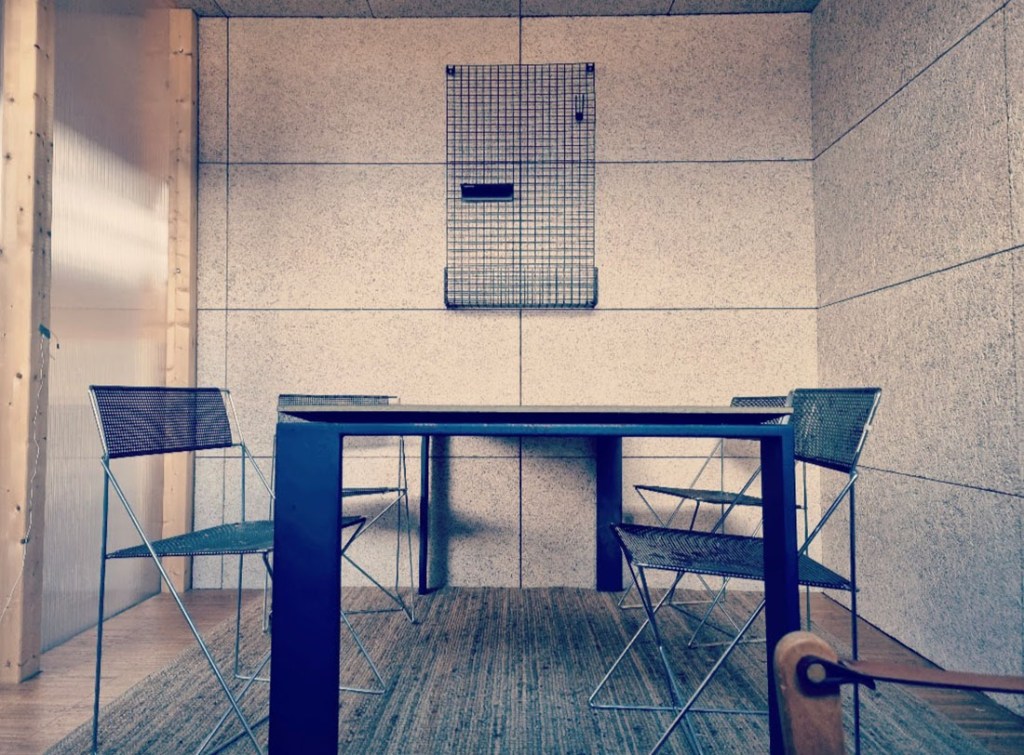
And main thing, going back to my first encounter with hay: fibres, fibres, lots of fibres as in "cement bonded wood fibre" panels, cladding both the walls and ceiling of the “back office”. Like a huge nest, cocoon, private space.
Surfaces, and straps:

The Process. Joy
Enjoy and Rejoy.
Understanding quickly that An Atelier in an old stable has by default an ephemeral character of a pop-up studio I decide to build with the mindset of Reuse, Recycle, like lunch of leftovers, that can be so much more creative than “regular” recipe, juxtaposing ingredients, sorry, objects not just of second hand, or second life but many many lives and hands.
That “low price, deep thinking”-operation consumes time but, in the end, combines materials and objects found on internet marketplaces, auctions, free giveaways, forgotten collections in forgotten storages, cellars and attics.
Par example, the Pallets that came from laid down industrial laundry and were stored in an elk hunting cottage middle of the woods meet an exclusive oak parquet flooring, 10 sqm leftovers from Malmö Live, concert hall that got Kasper Sahlin’s architecture price 2019, thus weaving together unlikely stories and bold matches.
Construction works: elevated stage, platform, EU standard plastic pallets from laundry and oak floor
How else would sea-resistant high glow yacht varnish contrast with wet chalk paint, or jute weave of potato sacks (essential for giving a right finish to renovated brick chimney) match so well with the canvas cloth of Ikea safari chairs from 1960? Or how the first lamp I ever bought and only could afford for my returned tax money and that had been standing in the my own cellar for 15 years – Modulars Nomad – gets to meet a Supertube, a ceiling pendant of Ateljé Lyktan from 1970, found in some random attic?
I am so proud of those unlikely rendez-vous, bringing together cellars and attics, nomads and tubes, cows and planes, beds and pallets, woods and cities, cottages and concert halls.
Sea-resistant high glow yacht varnish, inwards:

Infinity-pool.Sea-resistant high glow yacht varnish, view outwards:

Final.
According to the room program the following sharply contrasting spaces appeared:
/One, robust and brutal concrete-solid experiment container with industrial touch and hard bring-it-on-surface that is also open to public if you only push the floor to ceiling wall sized doors, exhibitionist space, exhaling space. Harsh acoustics, loud music. Work hard.
//two, the warm-colored soft-fibered smooth nest, sensual and silent (fibers – whispering acoustics!), behind the semi-transparent sliding barndoors, a womb made of oak, hemp, cork and canvas, intimate space, inhaling space. Spiritual and cerebral space. Think hard.
///three, playground. countryside-courtyard space, botanical space, outside space, warm up and cool down space, start up and close down space, always open space, outdoor exhibition space. The wrap, envelope, floating together with the gardening shop-neighbour one side and estate park on other side, with the acoustics of birdsong. Play hard.
SILENCE, recording thoughts, and birdsong:

Change of surface:
Materials, canvas, cork, hamp:


P.S. ATELIER/LAB?
Hands on – Not Only Words
To say that I want to build an experiment box for myself where I can test ideas, materials, finishes, processes – but does it really work? Is it an after-construction of a PR communikateur?
The fallen apart chimney in far corner was ready to be test dummy. As this part of Scania is former sea bottom (clay!) it had a recent past of brick heaven. And accordingly, some brutalist architects in Lund had taken pride in going crazy with some mural techniques, especially one was very wild but – do I dare? Need to try. So I decided the chimney will be renovated in “skura sack” style: cement between layers is roughly spread also over and across the bricks and then dried rapidly intensely rubbing it with jute weave cloth (in my case potato sack).
Result: The surface of chimney turned into golden and silky skin in spite of materials used were rough like cement and brick. The cement between and on the bricks tied it together with cement between and on fibers (wooden fiber panels) in rest of the room, in nest of the room. Lesson in technique: how to make hard surfaces soft and blend them. ❤
After, before:


 iliilil